 Free Shipping
 Made In USA

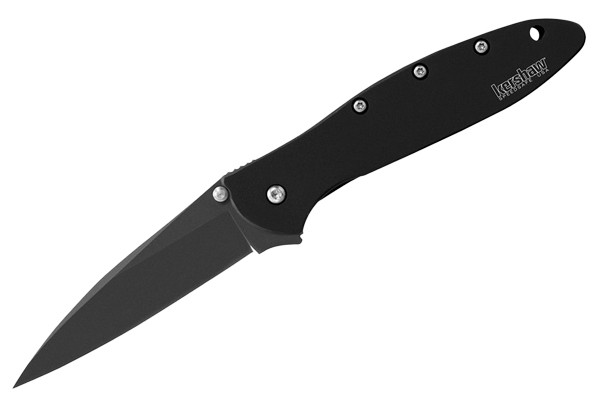
The Kershaw Leek has been one of the best-selling assisted opening knives in America for over two decades. It was designed by Ken Onion, the custom maker who invented SpeedSafe and was inducted into the Blade Magazine Cutlery Hall of Fame, and it set the template for a slim, fast-deploying EDC folder. The vegetable name is an Onion signature, shared with the Chive, Scallion, and Shallot in his Kershaw designs. At about 3 ounces with a 3 inch blade, 4 inches closed, the Leek disappears in dress pants or jeans and remains a defining model in the full line of Kershaw knives.
The standard 1660 Leek runs Sandvik 14C28N, a Swedish stainless developed at Kershaw's request that holds a good edge, resists corrosion, and resharpens easily. The MagnaCut Leek pushes edge retention and toughness higher, the Damascus Leek brings a patterned blade, and the Composite Blade Leek brazes a D2 edge to a 14C28N spine. Our knife steel guide compares them.
Ken Onion's SpeedSafe uses a torsion bar that takes over once you start the blade with the thumb stud or the spine flipper, for fast, ambidextrous deployment. The Tip-Lock slider guards against opening in the pocket. Stainless steel Leeks use a frame lock that keeps the profile thin, while aluminum handled Leeks use a liner lock. Our guide to knife lock types covers the difference, and the full lineup sits under Kershaw assisted opening knives.
Kershaw has released dozens of Leeks. The Random Leek and Leek Reverse Tanto change the blade geometry, the serrated Leek handles rope and webbing, and the Copper Leek develops a patina with use. The Carbon Fiber Leek, BlackWash Leek, and Trout Leek round out a lineup that rotates through colors like teal, olive, and orange.
The newest release, the Leek Kings Camo, wraps the aluminum handle in the Kings Camo pattern over a BlackWash 14C28N blade. The aluminum frame drops the weight to 2.6 ounces and runs a liner lock, and like every Leek it carries a reversible tip up clip and Kershaw's Limited Lifetime Warranty.
Free Shipping Made In USA